AddThis


Is Stress Overwhelming You?
 Is Stress Overwhelming You?
Dr. Duke Johnson, M.D.
Medical Director, Nutrilite Health Institute Center for Optimal Health
Stress: It's a serious health problem for every industrialized society in the world. In a way it's strange, because progress and technology were designed to make our lives easier. Instead, they have prevented us from getting away from our work and obligations.
In the past, you left work and you were done – but not anymore. These days, we often receive text messages and emails around the clock. Factors like competition, tight timelines, and economic pressures mean companies must operate at maximum efficiency in order to survive. The media reports daily on global economic instability and recession, so it's no wonder everyone feels stressed.
Stress can have serious negative short-term and long-term impacts on our health. Stress can raise blood pressure, lower immune function, trigger asthma attacks, cause ulcers, and increase the risk of digestive problems.1 The bottom line: Controlling stress is critical if you want to achieve optimal health and increase your longevity.
The common recommendations for handling stress are usually not the most effective. When I began researching stress more than a decade ago, I collected more than 400 articles on the topic. Surprisingly, I found nearly everyone makes the same recommendations for handling stress. These typically include ideas like get away, take walks, meditate, listen to music, or find some alone time. While these techniques can help if you feel overwhelmed, they are temporary band-aids for a bigger problem.
Most of the stress we experience occurs when we lose sight of the priorities in our lives. Day-to-day "emergencies" demand most of your attention, and many of us have lost the ability to set boundaries on how and with whom we spend our time. In this way, life becomes a game of survival where your only goal is crossing things off your to-do list. As a result, you end up simply existing when you could be living a life that corresponds with your beliefs and goals.
For your health, you must learn to prioritize your life. You need to live according to your beliefs and learn to set boundaries. Remember, there are right and wrong ways to de-stress, which I explain in my new book, Optimal Health Revolution. By using stress reduction strategies that really work and keeping your eye on the big picture instead of the everyday emergencies, you can reduce stress and reach your goal of obtaining optimal health.
1 Harvard Health Publications Group. “How Stress Affects the Body.” Stress Control (Harvard Special Health Report) May 2006: 37–41. Health and Wellness Resource Center. Web. 19 Aug. 2009.
Fighting Stress With Nutrition
 Fighting Stress With Nutrition
Julianne Downes, R.D.
Certified Weight Management Trainer
Eating a healthy diet is always important – but it becomes particularly essential during times of stress. Unfortunately, most of us find eating healthy is even more difficult when we're stressed. Usually when we're stressed, we rush around and feel like there's never enough time to get through our to-do list. As a result, healthy food becomes less of a priority and we turn toward convenience foods and carryout.
Stress affects the eating habits of each person in different ways. Some people may lose their appetite, forget to eat, or skip meals. As a result, their bodies must use stored energy. This is tough on the body anytime, but especially when it is stressed. Other people may overeat, continuing to eat whether or not they are hungry. Others simply make bad decisions, eating fast food and prepared frozen meals or drinking too much coffee and alcohol. All of these reactions to stress are bad for your health and may even increase stress.
When we are stressed, we need to focus even more on healthy eating in order to avoid destructive eating habits. Each of our bodies can react to stress in different ways, and if our bodies are deprived of important antioxidants, phytochemicals, vitamins, and minerals, health problems can take hold – raised blood pressure, decreased immune function, and digestive issues.
During times of stress, follow tried-and-true healthy-eating strategies. Eat plenty of different vegetables and fruits in a variety of colors. Decrease your intake of omega-6 fats found in corn, soybean, and safflower oils and increase your intake of omega-3 fats found in olive oil, vegetables, and salmon. These “healthy fats” help boost the body's immune system during times of stress, while the antioxidants found in fruits and vegetables help protect your cells from damage.
Remember, stress is part of life so we need to think carefully about how we respond to it. The best solution is to eat a healthy diet all the time – especially when we're stressed. Cut back on convenience and fast foods, caffeine, alcohol, high-fat foods, and sugar. Then, boost your intake of fruits, vegetables, and healthy fats.
At first it may not be easy to eat healthy foods when you are stressed, but keep trying! Remember, no one is perfect – so take supplements to make sure you're getting all the nutrients you need. Finally, use other avenues to manage stress like exercise, time planning, and relaxation techniques. In the end, your body will thank you!
Resource: Nutrition and Immunity, The Stress Response. Dales Ames Kline, MS, RD, LD, CNSD. January 2008.
10 Minutes a Day to Build a Stronger, Healthier You!
 10 Minutes a Day to Build a Stronger, Healthier You!
Sean Foy, M.A.
Author of The 10-Minute Total Body Breakthrough
In 2010, how would you like to have a healthier body, home, and business life? You can! It’s easier than you’d think, and you can start to do it in just 10 minutes a day.
Suppose the January 1, 2010, newspaper headline read, “Magic Health Potion Discovered!” The article went on to describe that scientists had designed a miracle medication that will help to lower your risk of diabetes, obesity, heart disease, stroke, and several types of cancer. The same medication may also rev up your metabolism, help your body burn fat, and give you more energy. And, it can strengthen your muscles, help maintain bone health, help to reduce stress, and even help you look years younger! The best news … this magic potion is cheap and available everywhere!
Would you run out the door in your new Christmas pj’s to your local drugstore to find this “magic potion”? Your instinct to “run” is on target for the magic potion.
Motion Is the Magic Potion
The magic potion I’m talking about is exercise. Stay with me now, and let me tell you’ve what I’ve learned.
The physical benefits of exercise are extensive and well-documented. But to my knowledge, no studies have been done on the ways in which getting fit can change your life. At Nutrilite Health Institute (NHI), we have tested the 10-minute 4-3-2-1 workout, and we’ve seen some interesting results. One breakthrough is that people see 10 minutes as “doable.” As they started the 10-minute routine, they also began to make other changes in their life too. From our documented cases, many participants reported better self-esteem, higher business productivity, more self-control, increased happiness, and better relationships.
To improve your life there is not much that will compare to moving your body more – even just 10 minutes a day.* Exercise can transform the way we feel, think, act, and look. You can have a healthy body to meet your daily obligations and have leftover energy for fun! When your health and fitness improve, you can have the strength and energy to experience more that life offers.
4-3-2-1 DONE!
I would encourage you to visit my website: www.4321fitness.com to learn more about how moving your body just 10 minutes a day, the 4-3-2-1 way, on a regular basis will help you experience success, and you can begin the journey to transform your health.
You can do it! Start today! Remember to start small and finish strong!
All the best in 2010!
Coach Sean
*Consult with your doctor prior to starting any new exercise program.
Optimal Health for 2010 and Beyond
 Optimal Health for 2010 and Beyond
Dr. Duke Johnson, M.D.
Medical Director, Nutrilite Health Institute Center for Optimal Health
Would You?
Would you like to wake up each morning with such strength and vitality that you didn’t need something to “rev” you up? Would you like to feel confident that you are taking positive steps to reduce the chance of chronic disease? Would a natural reduction of much of the pain you are experiencing be of interest to you? Would you love to have people marvel at and envy your endurance that is a result of the healthy lifestyle you live? Is real weight loss and weight maintenance of interest to you? Would you really like to know which pathway will help you achieve your best health?
No Fads Allowed – Just Good Health
It seems as if everyone in the media is a “health expert” but in reality, a majority of these “self-proclaimed” experts do not base their claims in solid science or have your long-term health in mind. At Nutrilite Health Institute (NHI), we aren’t interested in popular fads because they are almost always misdirected or too narrowly focused. If we aren’t promoting something popular, there is a strong reason for it. We base all that we do on the best science available and a truly unique global perspective to enhance our teaching. At Nutrilite, we have been on the cutting edge of science for 75 years, and we won’t stop asking questions in the future. We want you to have the best products we can develop, to support a lifetime of good health, with science that will last the ages.
Perfection? Nope, Just Positive Steps
Optimal health at NHI involves your total lifestyle – every crazy, busy minute. We don’t teach or expect everyone to be perfect, but rather to take small steps in the right direction that can ultimately lead to your best health. Small changes can become habits, and maintaining a healthy lifestyle can become a part of who you are.
Taking small steps to change your current habits can help to keep chronic disease out of your future. It’s much better to change now and enjoy good health, than to be forced to change later. What better time to begin this pathway than at the start of 2010? We know the path to optimal health is possible, because there are many Amway Global Independent Business Owners that we’ve seen whose lives have changed dramatically.
Join an Optimal Health Revolution in 2010
At NHI we offer our Amway Global Independent Business Owners the opportunity to participate in a 1, 2, or 3-day program in Buena Park, California, and over 15,000 IBOs globally have been through our program. Since everyone can’t visit, I hope that my new book, entitled Optimal Health Revolution, by BenBella Books, will help you begin the right path today. It’s written for those of you without any science training but is packed with over 900 scientific references for those who desire all the facts. Over 150 scientific references support the use of supplementation, and the book lays out much of the NHI optimal health philosophy for true lifestyle change.
Take your first step toward optimal health so that you can experience the life you were intended to have.
For optimal health,
Dr. Duke Johnson M.D.
Oh My Aching Back: Helping Back Pain with Exercise
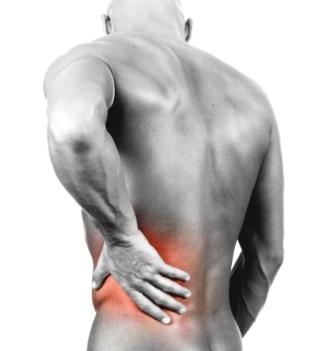
When your back hurts, everything seems to hurt. By the age of 45, most people will have experienced some form of lower-back discomfort. Other than the common cold, lower back pain is the most common reason people miss work in the United States. Lower back pain is also one of the main health obstacles to maintaining a regular fitness program.
There are three common types of back problems. One widespread back problem is a strain – an injury to a muscle or tendon of the lower back. Other common problems include sprains – injuries to the ligaments supporting the spine, and herniated disks – small, round cushions between the vertebrae of the spine are displaced.
Your back is made up of three main areas: the upper portion of your spine (the cervical), the middle portion (the thoracic), and the lower portion (the lumbar). The lower back connects your chest, arms, and upper body to your hips, pelvis, and legs – your lower body. The strength and mobility of your lower back is crucial to basic daily activities including: sitting, standing, walking, lifting, twisting, turning, and bending.
Lower back pain and injury is usually caused by one of several factors:
- Poor posture.
- Improper body mechanics.
- Prolonged sitting.
- Sudden, quick movements that damage ligaments.
- Muscles or tendons that have become overly tight due to a lack of core conditioning.
In my book, The 10 Minute Total Body Breakthrough, I explain in detail how to move your body the "4-3-2-1" way to help prevent lower back pain. In this article, I'll share some simple steps to get you started.
Consult your doctor. If you are experiencing lower back pain, discuss your condition and your current fitness level with your doctor. If your back pain is serious, work with your doctor to create an action plan to help you get moving again. Remember, inactivity has been shown to make back pain worse and increase your discomfort.
Perform aerobic exercise safely. After you get your doctor's go-ahead, choose aerobic activities that are easy on your joints, such as walking or stationary cycling. Get moving for 10–30 minutes a day, at least three days a week. You may also want to consider exercising in a pool to relieve the strain on your back. Avoid performing any exercises that are jarring to the joints such as jogging, running, jumping rope, or jumping jacks.
Begin resistance and core training. Develop a resistance and core program to improve your overall body strength. In resistance training, you'll need to avoid some movements to prevent further injury. Skip any exercises that involve raising a weight above your head or placing weight on your back. For example, don't do dumbbell or barbell shoulder presses, barbell squats, or resistance band overhead presses. Also, skip any exercises with twisting motions. Then, remember to perform resistance training movements in a slow, controlled motion.
Perform movements involving the upper and lower body, such as wall pushups or wall squats. Or, use a resistance band and do stationary lunges or arm curls. Try a stationary back or side plank to strengthen your core muscles, which include your abdominals, back, and obliques. Also, one of the best tools to help strengthen your core and overall body during your workouts is a stability ball. Aim for one resistance and core training session three days a week on alternating days.
Stretch regularly. Stretching provides many benefits for your body, which include increasing muscle flexibility, strengthening tendons and ligaments, increasing joint mobility, improving posture, decreasing back pain, and many others. Stretch every day to alleviate lower-back discomfort and prevent further injury. Stretches such as a seated forward bend, seated arm reach, or chin-to-chest stretch are all examples of static stretches you can do. Hold each stretch until you feel mild tension for 15–30 seconds, and do them as often as you like throughout the day.
Sean Foy, M.A.
President, Personal Wellness Corporation
Turning Off Your Genetic Risk

Kenneth Kornman, D.D.S, Ph.D.
As you get older, certain diseases often follow. Diseases typically associated with aging include heart disease, stroke, Alzheimer's disease, dementia, obesity, diabetes, cancer, osteoporosis, and joint problems. It's a long list, but don't be discouraged. Optimal health is all about delaying and helping to prevent your experiences with these diseases of aging.
All of these conditions are caused by interactions between our genes and the environment in which we live. Cardiovascular disease, which includes heart attacks and stroke, is one example. We know that our lifestyle – including smoking, physical activity, and diet – are major factors in our cardiovascular health. We also know that genetics play an important role, because a family history of heart attacks before the age of 60 is a significant risk factor for heart disease.
The good news is that you can make changes to reduce your genetic risk for these diseases of aging. Although you cannot change the genes you inherited from your parents, you can change the way your genes work to make your body healthier.
Nutrition is one of the strongest determinants of how your genes behave. Scientists now know that some of your genes have variations that alter their behavior. For example, a gene can be influenced to produce more or less of a certain chemical over time. The goal is to reduce the output of genes that produce chemicals that can be harmful, such as plaque-producing genes that can clog your heart's arteries.
This is where the exciting new science of nutrigenomics takes center stage. In nutrigenomics, we are working to discover which genes in your body are affected by certain nutrients. For example, what do the bad saturated fats do to the machinery of your body – your genes? This does not mean that you should have a customized diet, since the science is nowhere near making that a reality. But there are ways today to classify people into a few genetic patterns, and you can learn to make better use of certain nutrients and supplements.
What we can learn now from nutrigenomics is that you may be able to modify even the genetic risk factors for diseases associated with aging, with a healthy diet – risk factors we once thought were irreversible. Nutrigenomics gives you yet another compelling reason to strive for a healthy diet in order to live your life in optimal health.
Kenneth Kornman, D.D.S, Ph.D.
President and Chief Scientific Officer, Interleukin Genetics
Nutrigenomics: Where Diet and DNA Meet
Nutrigenomics: Where Diet and DNA Meet
Dr. Duke Johnson, M.D.
Medical Director, Nutrilite Health Institute
In the last decade, scientists have found that the effect of our diet on our bodies is far more complex than we ever imagined. These findings have opened up an exciting new area of science called nutrigenomics – the study of how diet works in our bodies at the molecular level.
In the past, we had a good idea of the ways the food we ate was used by our bodies, but we didn't understand the process completely. For many years, we have known our digestive tract breaks down food to its smallest building blocks, allowing the food to enter the bloodstream. For example, fats are reduced to fatty acids, and carbohydrates become simple sugars. These basic components – along with vitamins, minerals, and phytonutrients – enter the bloodstream from the digestive tract, pass through the liver for processing, and are then transported to every living cell in our body.
Today, we know much more about what happens to those nutritional building blocks once they enter our cells. Not long ago, scientists believed these nutritional components did most of their work in the region of the cell located outside the nucleus called the cytoplasm. We knew these nutritional components were needed to produce energy and help with many other cellular functions. But, we were unaware these basic nutrients actually influenced our genetic code as well.
Recently, a significant amount of research has shown many of the nutrients we eat actually enter the cell nucleus and affect our genetic code, known as DNA. The nucleus is a special compartment inside the cell that holds our DNA. Another term for DNA is genome, and by combining the words "nutrients" and "genome," we get "nutrigenomics," the study of how the nutrients we eat affect our DNA.
The relationship between our diet and our DNA is quite complex. DNA is made up of genes, which are the "blueprints" of proteins responsible for running the reactions in our cells. Some genes make good proteins known as enzymes, and other genes make proteins that can be harmful to our health in large amounts. It is also important to know that all of our genes aren't always turned on. Genes are like a light switch. We turn them "on" or "off" with our lifestyle choices.
Nutrigenomics is helping us understand how nutrition affects our health better than ever before. For example, unhealthy foods may actually switch "on" some of those harmful genes. On the flip side, healthy foods that provide good nutrients can likely switch "off" those bad genes.
Though the science of nutrigenomics is relatively new, it is already allowing us to expand our knowledge of nutrition. As you can see, it is also strengthening the case for healthy eating – showing you that the food you eat has a tremendous effect on your health and disease risk, even at the genetic level.
Special Note: Fad diet promoters often have no knowledge of nutrigenomics and commonly recommend foods that turn on bad genes. Since we work with some of the most knowledgeable people in the field of nutrigenomics, you can feel confident that my recommendations concerning food take this field of science into consideration with your best health in mind.
Dr. Duke Johnson, M.D.
Medical Director, Nutrilite Health Institute


